
Blog
The Resurrection Tour
Apr
Being at the end of Lent, with Easter waiting around the corner like a promise wrapped in conditions, draws me back to the early sixties in downtown Toronto, when Catholicism wasn’t a faith for me so much as a fully integrated operating system for life. It governed posture, tone, silence, guilt, shame and above all, appearances.
St. Peter’s was our parish and also the name of my historic school, which has since been resurrected into a condo. My grandmother lived across the street devout in the way only her generation could be: unquestioning and keenly aware of who was watching whom.
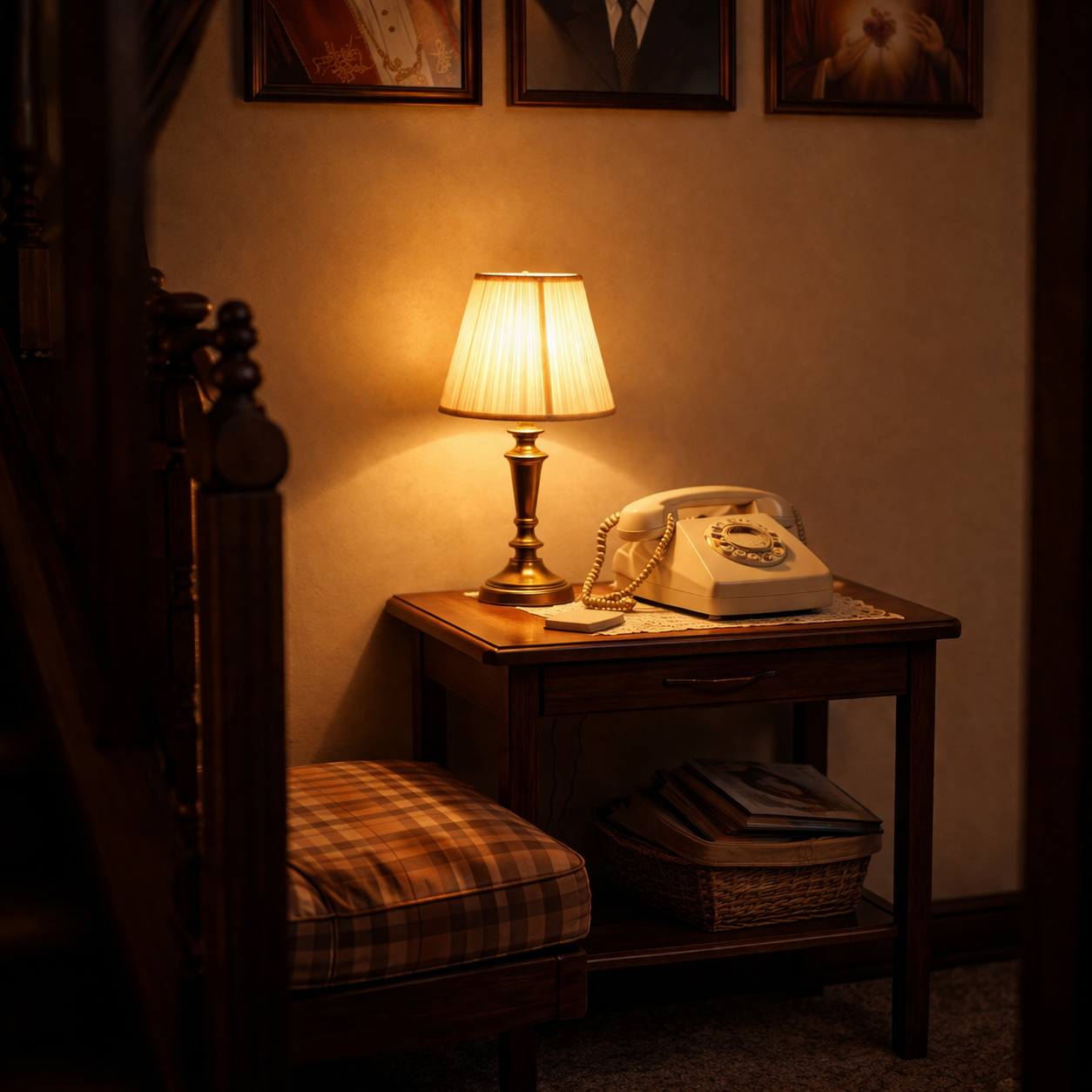
As you entered her house, three framed portraits hung above the hallway radiators, positioned just above eye level like a sacred surveillance system. The first depicted a man in all white, complete with a hat eerily similar to the Good Witch of the North; however, unlike her, he appeared profoundly and perpetually disappointed. I was okay with the last two coming over for dinner, but not the guy in the hat. As a child, I could sense his eyes following me, silently auditing my soul, as I quietly watched television in my grandmother’s living room, too afraid to look over. The second was sharply dressed, with impeccable hair and a tailored suit. I assumed he was one of my dashing Uncle Emil’s close friends. My uncle looked like George Clooney before George Clooney knew he was George Clooney, and this man was as suave and elegant as he was. The third was my favourite. A long-haired, bearded man dressed in what we then called “boho shirts.” At a time when most men had crew cuts, to see a long-haired guy in the family, under a crucifix, framed no less, felt downright radical. After a few years, I learned the portraits were of Pope Paul VI, JFK, and Jesus. Three spirits whose lives, in different ways, carried the familiar burdens of humanity.
Beyond them sat a phone console, also known as the gossip bench in the day, which housed a party-line landline. This was my grandmother’s command centre. She didn’t just know what was happening on the block; she understood why it was happening and who should be ashamed. Guilt was her dice. If the Vatican had regional offices, she would have been running the Toronto area.
My Catholic school was strict back then. Nuns dispensed corporal punishment like Halloween candy. Even as kids, the hypocrisy was obvious, but resistance wasn’t part of the curriculum. Besides, we were already indoctrinated.
Confession was mandatory and weekly, and for seven-year-olds, inventing sins became a creative exercise. Stealing coins from newspaper boxes was common. The box would be emptied by late morning and, by evening, miraculously full again with dimes in time for the final edition and tally to balance the day’s sales. There was no rule prohibiting the return of the money, so we did. It was the act that mattered. The system trained us well. Cursing was an easy sin. Lying, too, though many of us were terrible at it thanks to older siblings who doubled as fact-checkers.
The real goal was to reduce penance. As kids left the confessional, a subtle thumbs-up or thumbs-down signalled to others whether it was a full rosary or just a few ‘Hail Marys’ mixed in with an ‘Our Father’ and then an ‘Act of Contrition.’ We understood which sins to confess to lessen our penance so we could get back to playing. We discovered early on that salvation could be scaled.
By high school, Catholicism collided head-on with sex, drugs, and rock’n’ roll. I became a CNE churchgoer. Christmas N’ Easter, though I never abandoned the values they claimed to uphold, I did find a way to practice them elsewhere.
I learned grace not from sermons but from shopkeepers who always had their doors open for us as children, all latchkey kids, if our parents were ever running late and we needed a safe place to wait. My mother taught me generosity, which I inherited as I watched her routinely leave groceries anonymously at the front door of someone on the block who was struggling to meet their basic financial commitments. I learned dignity and sacrifice from neighbours and their kids, who often sacrificed for others at the expense of their own kids or even siblings. Like small business owners who are insistent on paying their staff before themselves, because they believed it was the right thing to do. I learned about community from people who showed up repeatedly without applause, absolution, or a halo. They were the real deal, while others preached and pretended. The Church endlessly emphasized compassion, justice, and service while small businesses practiced these values daily. No procession. No Latin. Simply perseverance.
Easter Mass itself was extraordinary. Even the grumpiest neighbours showed a moment of kindness, lasting only for the service. Those who refused to contribute to the collection basket all year did so reluctantly and with the intention that the church should recognize their windfall. Once the doors opened after a long, incense-filled Latin procession, the gossip started again, blame was spread around like snow, and everyone slipped back into their usual ways. It was like a miracle happening in reverse.
Years ago, I read a piece that reinterpreted Easter as a journey through the dark night of the soul. A time when we question who we are, why we’re here, and whether any of it matters. The forty days in the desert weren’t about punishment but about silence, restraint, and reckoning. Reflecting inwards for the answers. Keeping ego and the noise outside while we align with our Higher Source. The crucifixion symbolizing the suffering required to gain this awareness, and the resurrection becoming a transcendent event. A profound realization that would shift one’s core to an awareness they had never known before. Something the church touched on but struggled to incorporate into everyday life. An enlightenment I learned in early adulthood that is available to everyone, not just some.
In my world, transcendence means advocating for the neighbourhood I grew up in, especially the small businesses and communities that lack lobbyists or choirs but still show up. It mirrors the pursuit of the higher calling that institutions claim to uphold but no longer practice.
The intersection of Bathurst and Bloor was my sacred corner. Back then, a holding cell stood across from St. Peter’s Church, where women working a far more entrepreneurial shift than the other women in the neighbourhood at the time would lean out and roast the police like it was an open-mic night. A block south of there was St. Peter’s School, and half a block south of there was Central Tech, which at the time felt less like a school and more like ‘To Sir, With Love‘ with better cigarettes and worse supervision. Between the nuns, the sirens, the shouting, the bells from the church and the school, the subway vibrating below, the streetcars clinging above, existed a beautiful chaos. My spiritual education came less from catechism and more from the raw, unfiltered gospel of urban humanity.
My faith now is less about incense and more about action. Less sermon, more service. Less promised salvation and more dignity in practice. Strangely, I learned all of it right there under the watchful eyes of three framed men, one gossip bench, and a church that showed me what truly mattered in the echo between its words and its ways.